UCS Pumpfoil rig
Carbon fibre pumpfoil rig optimised for low speed performance. Starboard UCS compatible.
- Brand: Petram
- SKU: FOIL
- Shipping:
Learn More
Complete Hydrofoil Set · Pump Foil / Dockstart
This foil setup is a purpose-engineered hydrofoil set designed from first principles for pump foil and dockstart disciplines — riding disciplines in which flight is sustained entirely by the rider's own pumping motion, without wind, waves or motor assistance. Every component has been dimensioned through analytical hydrodynamics, structural calculation and FEA simulation to deliver a predictable, low-fatigue ride for riders from 40 to 100 kg.
What's in the box
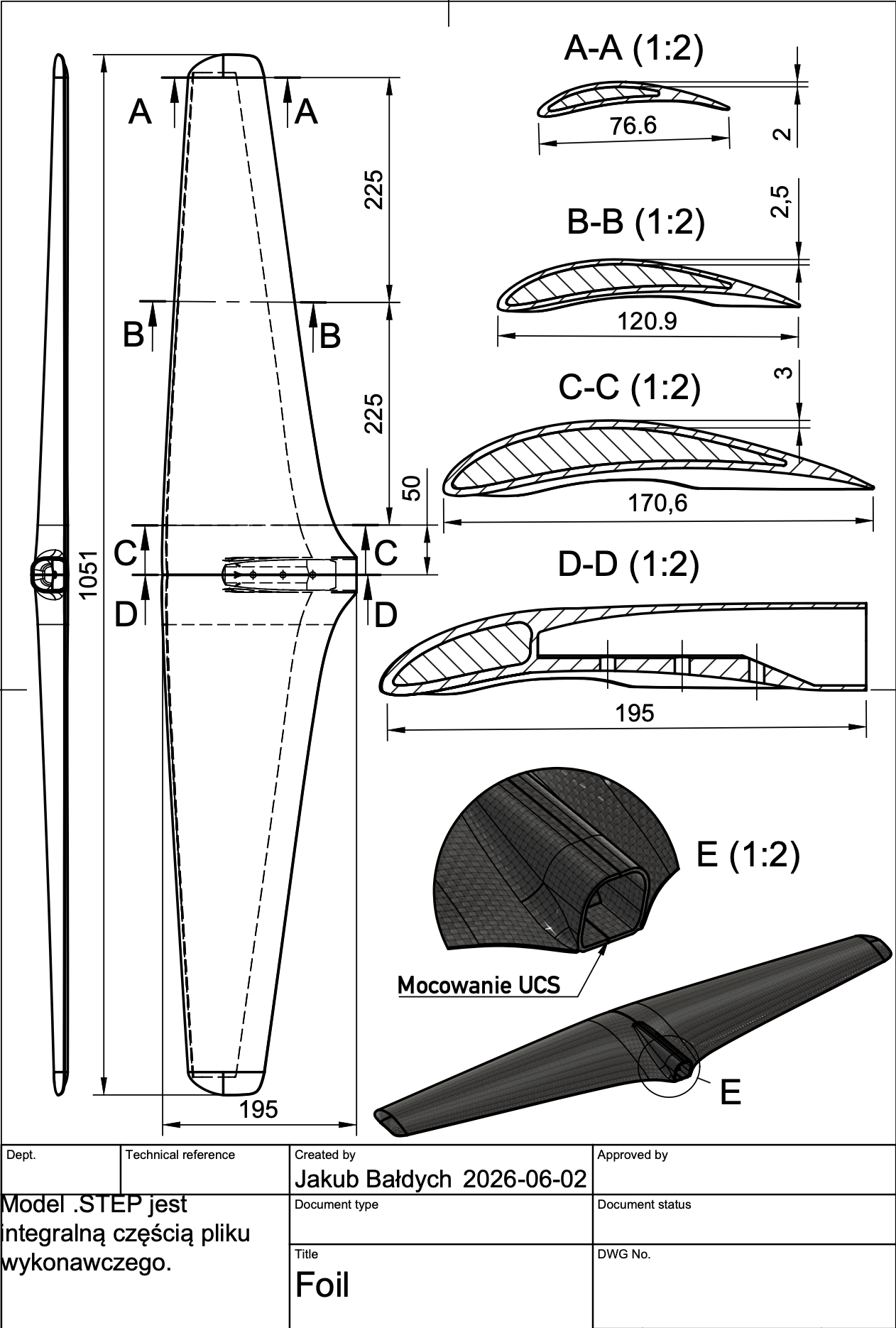
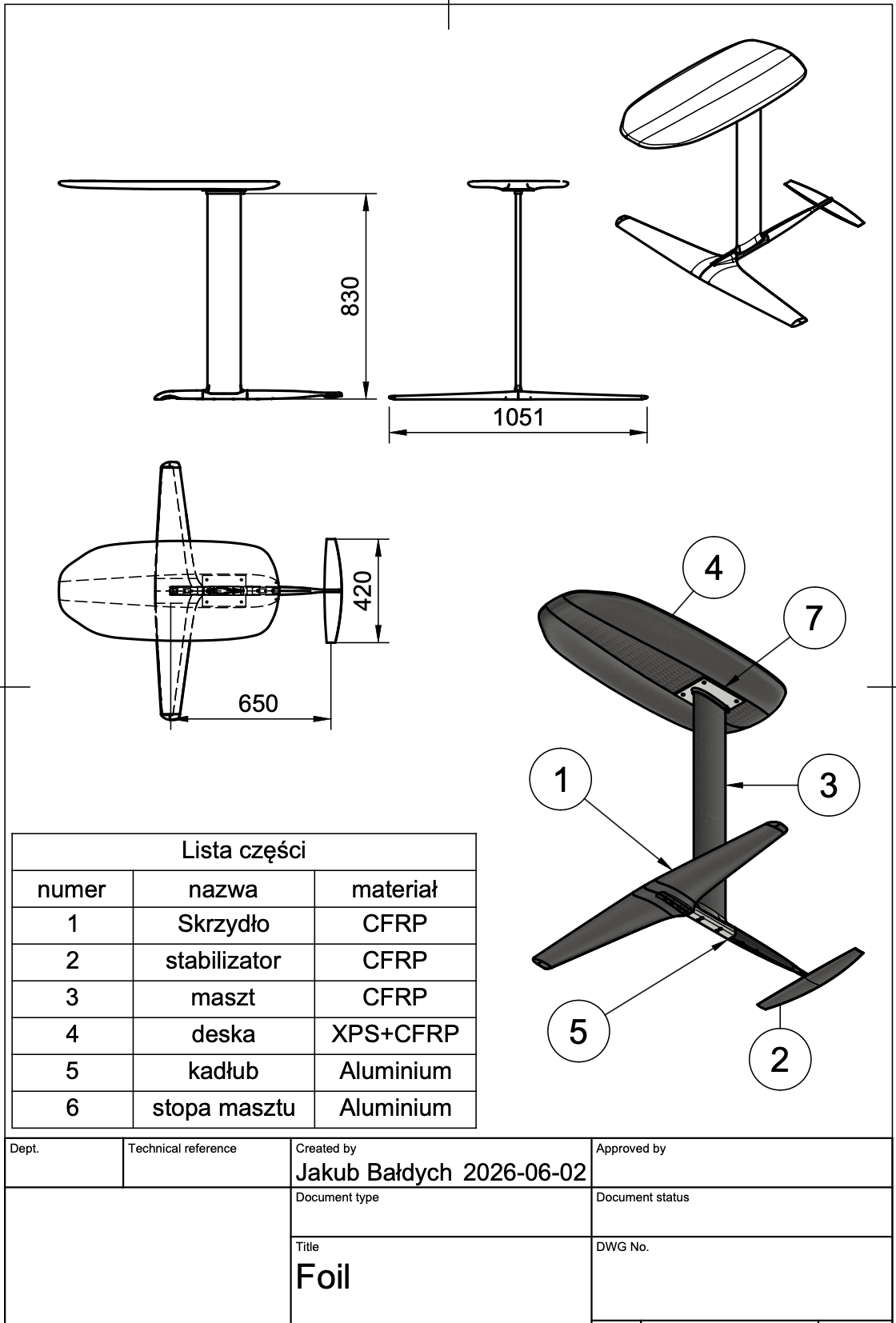
- Front wing — Eppler 423 profile, 1313 cm², span 1051 mm, AR 8.5, −2.0° washout | carbon UD spar + 2×2 twill skin | wet compression lay-up in CNC-milled PE-100 mould
- Rear stabiliser — NACA 4408 inverted, 235 cm², AR 6, carbon construction | negative lift to balance pitch moment
- Mast — NACA 0014 symmetric section, 135 mm chord, carbon laminate | drag-optimised for the full operating speed range
- Fuselage — carbon tube, 675 mm, 24 × 40 mm frontal section | Starboard UCS compatible connection standard
- Board — stiff, lightweight EPS/carbon construction optimised for dockstart take-off | deck pad included
- Hardware — all stainless mounting hardware, UCS insert plates, M6 stainless fasteners
Performance highlights
Take-off speed (v_TO) | 4 m/s (~8 knots) |
Cruise speed (v_c) | 7 m/s (~14 knots) |
Max operating speed | 10 m/s (~20 knots) |
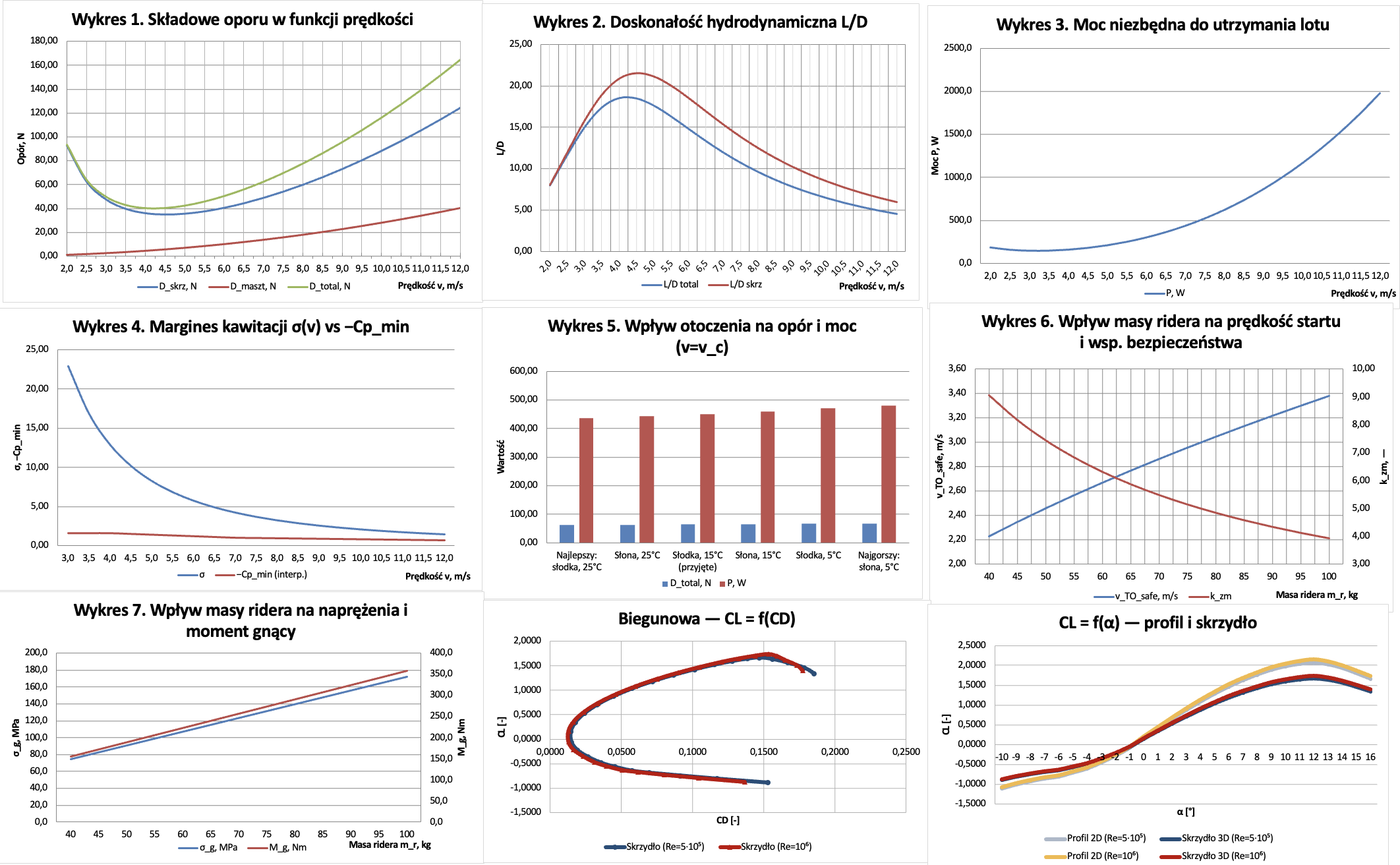
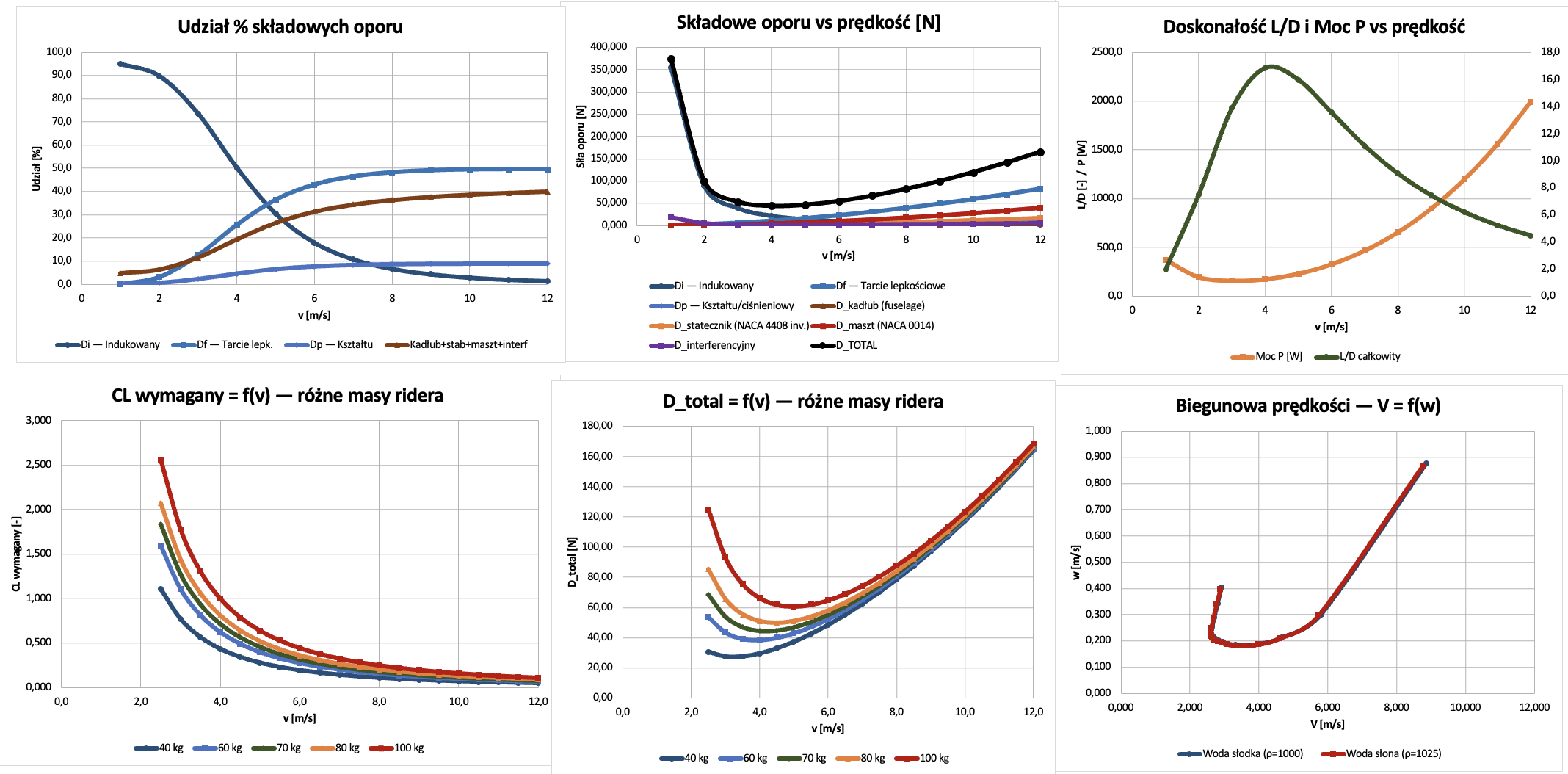
Lift-to-drag ratio at v_TO | L/D = 20.85 |
Lift-to-drag ratio at v_c | L/D = 15.32 |
Power required at cruise | 341 W |
Rider mass range | 40 – 100 kg |
Cavitation margin σ_min | 2.08 (no cavitation up to v_max) |
Front wing area | 1313 cm² |
Front wing span | 1051 mm |
Aspect ratio | AR = 8.50 |
Safety factor (fatigue) | k_zm ≈ 2.0 |
Engineered for pump foil — not adapted for it
Most foil wings on the market are designed for powered disciplines (kite, wing, wave) and adapted for pump foil use. It was designed for pump foil from day one. The Eppler 423 profile was selected — after comparing four high-camber candidates — specifically because it maximises C_L at the low Reynolds numbers (Re ≈ 3.4×10⁵) that occur during the slow, loaded phases of each pump cycle. At take-off (v_TO = 4 m/s), the required C_L = 0.72 sits at just 36% of the profile's stall limit, leaving wide margin for aggressive pumping strokes.
The high aspect ratio (AR = 8.50) minimises induced drag during cruise, while the −2.0° geometric washout ensures the tip stalls after the root — making the wing predictable and recoverable even during deep pump cycles at low speed.
Construction
- Wing skin: T300 carbon fibre 2×2 twill (200 g/m²) ± 45°/0°/90° layup schedule for torsion resistance and bending stiffness
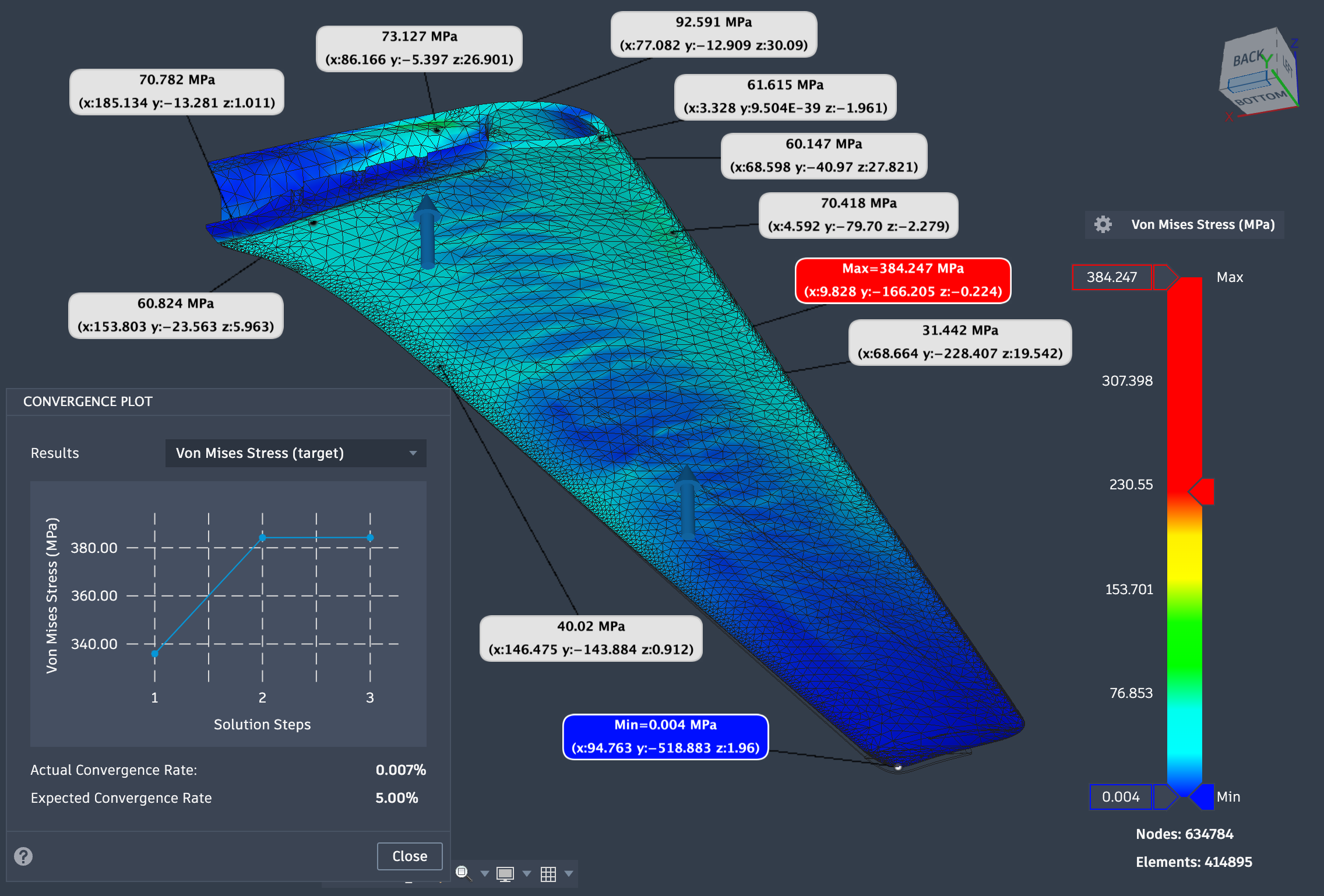
- Spar: T700 UD carbon tape (500 g/m²), 6 layers at root tapering to 2 at tip; biaxial ±45° shear webs — calculated bending stress σ_g = 105 MPa at N = 3 dynamic load
- Core: XPS foam, CNC-machined; UCS insert pocket machined to Starboard standard (165 × 90 mm) for direct board compatibility
- Mould: CNC-milled PE-1000 compression mould — single-shot wet lay-up, no bonded seam between upper and lower skins
- FEA validated: full 3D finite element simulation in Autodesk Fusion 360 — tip deflection ~3.5 mm at maximum dynamic load confirms stiffness target
Who is it for?
- Intermediate to advanced pump foil riders looking for a wing that rewards efficient pumping technique with minimal resistance at cruise
- Dockstart athletes who need reliable, low-speed lift generation from a standing dock start without requiring a long run-up
- Riders 40–100 kg — the design was stress-tested across the full mass range; even at 100 kg, C_L = 1.00 at v_TO = 4 m/s remains well below the stall limit
- Flat-water and light-wind spots where the only energy source is the rider — the 341 W cruise requirement is achievable for a trained athlete in continuous cyclic pumping
Compatibility
All components use the Starboard UCS (Universal Connection Standard) — an open, non-proprietary connection standard with a 165 × 90 mm bolt pattern. The wing, fuselage, mast and board are all UCS-compatible, meaning individual components can be swapped with any other UCS-certified equipment from major brands.
All performance figures are based on analytical hydrodynamic and structural calculations verified by finite element analysis. Actual performance may vary with rider technique, water conditions and equipment maintenance.